

“Am I doing the right things with my money… for where I am in life?”
- Apr 24
- 4 min read
It’s a simple question. But behind it sits something more complex. Financial planning isn’t just one decision. It’s a journey that changes as your life changes.

What feels right in your 30s can feel completely different in your 50s. What felt simple at the start can become fragmented over time. And what once felt like progress can quietly turn into uncertainty.
This is how that journey often unfolds.
Stage 1: Starting Out – “Am I doing enough?”
Early on, the focus is usually simple:
Build savings
Start investing
Contribute to a pension
The challenge isn’t complexity. It’s confidence.
Common questions people ask include:
“How much should I be saving each month?”
“Should I prioritise a house, pension, or investments?”
“Am I behind already?”
At this stage, many people do something sensible but inconsistent. Money builds up in different places:
Workplace pensions
ISAs
Cash accounts
Individually, each decision is fine. But they are rarely joined up. A common challenge is not a lack of effort but a lack of structure.
Stage 2: Building Momentum – “Why doesn’t this feel clearer?”
As income grows, things change. There’s more coming in, but also more decisions. Bonuses, equity, multiple accounts, and tax considerations come into play.
This is where many people start to feel:
“I earn well… but it doesn’t feel organised.”
Common questions include:
“Where should I actually be putting my money now?”
“Am I being tax efficient?”
“How do I balance flexibility with long-term planning?”
“Should I invest more or keep cash?”
This stage often introduces something subtle but important: Complexity fatigue. Not because things are going wrong, but because everything is happening separately. Different pots, different timelines, different priorities. It becomes harder to see the full picture.
Stage 3: Peak Earning Years – “I should have this sorted by now”
For many high earners or business owners, this stage brings a different tension. On paper, things look strong:
Income is high
Assets are growing
Opportunities are there
But internally, it can feel less certain. A common pattern includes:
Cash builds up while waiting for the “right time”
Investments sit across multiple providers
Pensions are scattered
Tax decisions are made year by year
Common questions include:
“Am I using my income as well as I could be?”
“Is there a better way to structure this?”
“What am I missing?”
This is often where planning shifts from doing more to making things work together. The value of clarity becomes more important than optimisation.
Stage 4: Approaching Retirement – “Are we actually okay?”
This is where the emotional side becomes more visible. You may have:
Several pensions
Investments
A mortgage nearly cleared
Strong headline numbers
But a different kind of question starts to appear:
“Can we afford to stop?”
Not just financially, but emotionally. Common concerns include:
“How much can we actually spend?”
“What if markets fall at the wrong time?”
“How long does this need to last?”
“Are we taking too much risk, or not enough?”
Many people describe this stage as:
“We think we’re okay… but we’re not sure.”
Confidence becomes more valuable than numbers.
Stage 5: Retirement – “Now what?”
This is where things shift again. You move from:
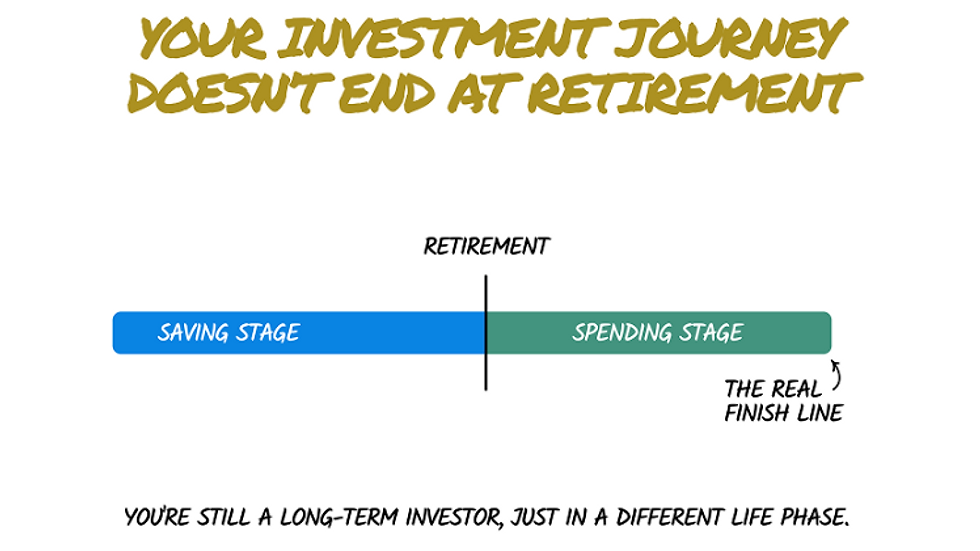
Saving → spending
Growing → drawing
Planning → living
With that comes a new set of decisions. A common instinct is to “play it safe.” Hold more cash, reduce risk, and avoid volatility. On the surface, that feels sensible. But the reality is more nuanced.
You Don’t Stop Investing in Retirement
One of the biggest misconceptions is that retirement is the end of investing. In practice, it’s often just a different phase. Many people now face 20–30+ years in retirement. That changes things:
Inflation continues
Spending continues
Markets continue
What once felt like a “safe” approach can quietly become a risk over time. For many people, the real challenge becomes:
“How do I balance stability today with growth for the future?”
A common approach people explore includes:
Keeping a short-term cash buffer
Allowing longer-term investments to continue growing
Not to take more risk, but to manage different types of risk over time. Because avoiding short-term volatility can sometimes increase long-term pressure.
The Emotional Side Most People Don’t Talk About
Across all stages, there’s a consistent theme. It’s rarely just about money. It’s about how money feels:
Uncertainty leads to inaction
Complexity creates avoidance
Confidence comes from clarity, not perfection
Many people don’t struggle because they lack options. They struggle because:
There are too many moving parts
No clear structure
No one joining it all together
Why Some People Choose to Outsource Financial Planning
At some point, a different question tends to appear:
“Do I actually want to manage all of this myself?”
Not because they can’t, but because of what it takes:
Time
Attention
Ongoing decisions
Keeping up with change
For many people, the appeal of working with someone isn’t about outsourcing responsibility. It’s about reducing mental load. Having:
A clear plan
A joined-up view
Someone thinking ahead
Someone challenging decisions when needed
Questions often sound like:
“Am I saving the right amount into my pension?”
“Should I be investing more or holding cash?”
“Is everything working together properly?”
There’s rarely a single “right” answer. But having a framework tends to make those decisions easier.
A Different Way to Think About Financial Planning
At Finova Money, the focus is rarely on one decision. It’s about how everything connects:
Income and tax
Investments and timeframes
Pensions and future income
Cash and flexibility
Because the biggest gains often don’t come from one change. They come from consistency over time and from having a plan that evolves as life does.
Final Thought
Your financial journey doesn’t move in a straight line. It shifts:
As your income changes
As your priorities change
As your time horizon changes
What worked five years ago may not feel right today. That’s normal.
The real question isn’t:
“Am I doing the perfect thing?”
It’s:
“Do I feel clear and confident about where this is going?”
This article is for general information only and does not constitute personal financial, investment or tax advice. Everyone’s circumstances are different. The value of investments and the income they produce are not guaranteed and can fall as well as increase.